
Hospitality: Lone Worker Alarm Protection at Closing Time
When a bar manager is the last person in a large restaurant at midnight, waiting for a delivery with a rear door propped open, the question is not whether something could go wrong. The question is what happens when it does. This use case explores how a lone worker alarm system designed for the hospitality sector performs exactly when it needs to. And what that means for the security companies who deliver it.
The Moment a False Alarm Proved the System Works
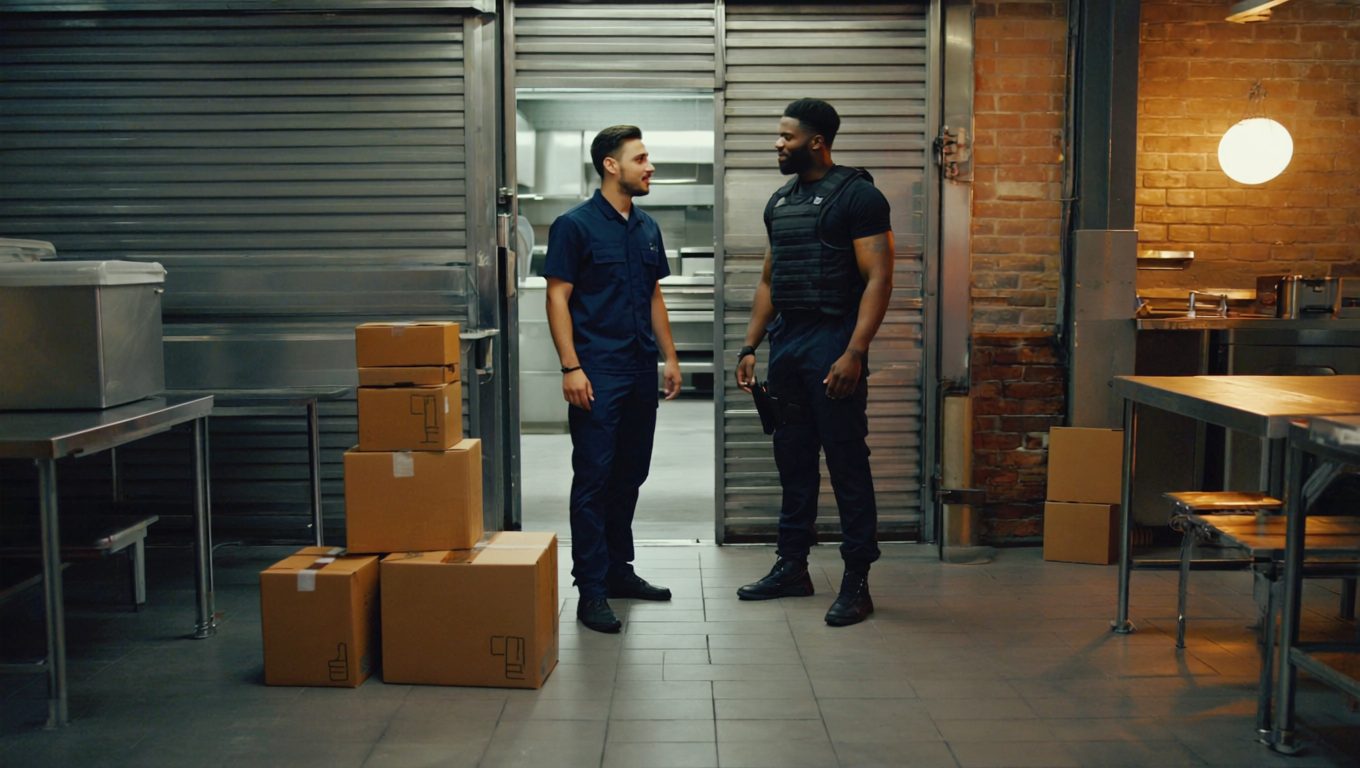
It was late in the evening when the bar manager realised he was not alone. He had been working solo, closing down a large restaurant in Turnhout, Belgium. A delivery was expected (they usually come through the front door). The rear entrance had accidentally been left open after taking out the rubbish for collection. Then came sounds from the back. Unexpected movement; unannounced presence.
He activated his personal alarm. Within two minutes, a security guard employed by his alarm provider was on site. He was driving nearby. And the intruder? He turned out to be the delivery driver, who had let himself in through the open rear door without announcement. A false alarm. No incident, no injury, no escalation.
But here is what matters: the bar manager was not shaken by the false alarm. He was impressed by the response. That two-minute arrival time, that seamless escalation from a quiet evening to having physical protection when in distress. That is what transformed him from a passive end user into what his security provider now describes as one of his most vocal ambassadors. The lone worker alarm hospitality closing time scenario played out exactly as designed, and the outcome was trust.
Why Closing Time Is the Highest-Risk Shift in Hospitality
The hospitality sector carries a structural exposure to lone working that is often underestimated. According to EU-OSHA data, more than 61% of food and beverage employees in Europe work in enterprises with fewer than ten workers. That is far above the EU-28 average of 42%, and it means that in the majority of hospitality businesses, there is simply no surplus staff to provide coverage, companionship or backup during high-risk moments.
Closing time concentrates that risk. A bar manager locking up, a restaurant supervisor cashing out or a kitchen porter finishing a late clean. These are people working alone, often in premises with multiple access points, reduced visibility to the street, and little expectation of colleagues arriving to check on them. Cash handling, unlocking and locking of external doors, interaction with late deliveries, and the general vulnerability of an empty building after hours create a convergence of risks that is genuinely difficult to manage through procedure alone.
The broader picture reinforces this. According to Berg Insight, about 1.4 million workers in Europe used a connected lone worker safety solution at the end of 2025. The European market was valued at €171 million in 2025 and is forecast to grow to €251 million by 2030. The commercial momentum is real, and the hospitality sector represents a significant and underserved slice of that opportunity.
For hospitality operators, the challenge is not awareness of risk. Most owners and managers understand that lone working at closing time is a vulnerability. The challenge is finding a personal alarm system for restaurant staff that is practical, reliable, and backed by a response that actually arrives.
What Happened When David’s Client Triggered the Alarm
To understand how a lone worker protection hospitality sector solution performs in practice, it helps to walk through the Turnhout scenario in detail.
The bar manager was alone in a large restaurant. His responsibilities that evening included final checks, cash reconciliation, and waiting for a confirmed delivery. A colleague had taken the rubbish out through the rear entrance and accidentally left that door open. The premises were otherwise secured.
When he heard movement from the back of the building, he could not immediately identify the source. He had no colleague to consult, no visible explanation for the sounds, and no time to investigate without putting himself at potential risk. He activated his personal alarm device: a discrete, wearable unit assigned to him through his employer’s security provider.
The alarm triggered an immediate notification through the monitoring platform. The nearest available guard was identified and dispatched. Two minutes later, that guard arrived at the restaurant and made contact with the bar manager. The situation was assessed: the delivery driver had entered through the rear door without making prior contact. No threat, no incident.
The resolution took less than five minutes from alarm activation to confirmed safety. The bar manager was able to continue his closing duties. The delivery was completed. And the entire chain of events from a personal alarm activation to a physical security response unfolded exactly as the system was designed to facilitate.
What makes this scenario instructive is not a dramatic element. It is how close to home it strikes. The real test of a personal alarm system for restaurant staff is not whether it works in a genuine emergency. It is whether it works consistently in the grey-area situations that make up the majority of lone worker incidents: unexpected visitors, uncertain sounds or aggression with the possibility to escalate. Moments where the risk is ambiguous but the need for backup is immediate.
For security companies considering how to structure their service delivery, the technical infrastructure behind this kind of response is worth understanding. The personal safety platform that powers these alarm workflows enables security providers to manage alarm activation, monitoring, and dispatch under their own brand. Giving them full visibility of live incidents without building the technology from scratch. For those managing alarms across multiple hospitality clients simultaneously, device management at scale is a practical tool. And in the back-of-house environments common to restaurants: basements, service corridors or loading areas, SIM and connectivity reliability is a non-negotiable factor in whether an alarm actually reaches the monitoring centre when activated.
How Security Companies Are Turning Lone Worker Calls Into Recurring Revenue
David, the security company owner behind this story, describes a turning point that many regional security operators will recognise. Before adding a personal alarm service to his portfolio, he was referring hospitality clients to competitors or hardware system integrators when lone worker protection came up in conversation. He framed it as professional courtesy. In practice, he was handing over account relationships he had built, and those competitors used them as a foothold to expand into other services.
When one of those restaurant groups returned. Not to David, but to the company he had referred them to, now upgrading CCTV in partnership with four of their franchisees, the cost of that professional courtesy became concrete. He had not lost a small referral. He had lost an account.
He launched his branded personal alarm service in June 2025. By the following months, he had built a client base of hospitality businesses whose employees use his personal alarm service with physical alarm follow-up. Mostly bars, restaurants and hotels. That portfolio generates more than €3,000 in monthly recurring revenue after just six months. More significantly, it anchors his relationships with those clients in a way that makes displacement by a competitor considerably harder.
The shift from reactive security services to predictable recurring revenue changes how a security company operates. Instead of pricing hourly guard deployments and managing variable demand, a lone worker alarm service creates a subscription-based revenue stream that scales with the number of enrolled users. Rather than the number of guard hours deployed. For security company owners who have built their business on labour-intensive service delivery, that shift in revenue structure is commercially significant.
The white-label personal alarm security company model enables this without requiring the security provider to develop proprietary technology. The platform, the alarm hardware, the monitoring infrastructure and the connectivity layer are easily provided. What the security company contributes is the brand, the client relationships, the local knowledge, and the physical response capability. Which is, in most cases, exactly what they already have.
Adding Lone Worker Protection to Your Portfolio — What It Actually Takes
For security company owners evaluating whether a lone worker alarm hospitality closing time service is viable to offer, the practical questions tend to cluster around three areas:
- How quickly it can be operational
- How it is managed at scale
- And whether the margins justify the investment
On speed to market, a white-label platform can typically be live within a day and generating first client revenue within two to four weeks. That is a materially different timeline from building a monitored alarm service from proprietary infrastructure. Which would involve hardware procurement, software development, monitoring centre integration and staff training over a period of months.
On scale management, the device management layer of a well-structured platform allows a security company to oversee alarm devices, user assignments, and incident histories across all clients from a single interface. As the client base grows from five hospitality venues to fifty, that operational overhead does not scale proportionally. Which is where the recurring revenue model becomes genuinely attractive rather than theoretically appealing.
The margins are straight forward. A per-user monthly subscription, multiplied across the staff members of multiple hospitality clients. This generates a revenue line that requires minimal additional guard hours to service. Physical response is triggered only when an alarm activates, meaning the majority of the recurring revenue is earned through monitoring and platform access rather than actual deployed labour.
When presenting this proposition to hospitality clients, the emphasis should be on practical outcomes rather than technical architecture. Restaurant and bar owners understand closing-time risk intuitively. They do not need to be convinced that lone workers are vulnerable. They need to understand that a solution exists, that it works in their specific environment, and that when an alarm is triggered, a physical response arrives. Not a phone call. Not a remote assessment. A person.
The bar manager in Turnhout did not become an ambassador because the technology impressed him. He became an ambassador because someone showed up.
Based on a real Cuebly partner. Names have been changed for privacy.
Frequently Asked Questions
What makes closing time specifically high-risk for hospitality lone workers?
Closing time combines several risk factors simultaneously: reduced foot traffic outside the premises, cash handling, interaction with late deliveries or contractors, multiple access points that may be open for operational reasons, and no colleagues present to provide backup or witness an incident. This combination of factors makes the lone worker alarm hospitality closing time scenario one of the most consistent use cases in the hospitality sector.
How does a personal alarm system for restaurant staff actually work in practice?
A staff member carries or wears a discrete personal alarm device. When they activate it (either manually in a moment of concern, or automatically through a fall or man-down detection), an alert is sent immediately to a monitoring platform. A dispatcher identifies the nearest available response resource, whether that is a security guard on patrol or a dedicated response unit, and dispatches them to the location. The entire chain from activation to physical arrival can take as little as two minutes in urban environments where a guard is already nearby.
Can a small security company realistically offer a branded personal alarm service?
Yes. The white-label personal alarm security company model is specifically designed to allow regional and independent security operators to offer a fully branded personal alarm service without building proprietary technology. The platform and connectivity are provided externally. The hardware can be bought from any vendor and is integrated with the click of a button. The security company contributes their brand, client relationships and physical response capability. Resources they already have. Monthly recurring revenue from even a modest client base of hospitality venues can generate a meaningful and predictable income stream alongside existing guard services.
What happens if an alarm is triggered and it turns out to be a false alarm?
False alarms are a normal and expected part of any personal alarm service. In the Turnhout example described in this article, the false alarm which was triggered when a delivery driver entered unannounced through an open rear door, actually reinforced the value of the service. The bar manager experienced a two-minute physical response and came away with greater confidence in the system. False alarms are handled professionally, the situation is assessed and cleared, and the end user is left with direct evidence that the service works as described. That outcome is considerably better than no alarm system at all.
How quickly can a security company start generating revenue from a personal alarm service?
With a white-label platform, the operational infrastructure can typically be live within a day. Converting that into first client revenue generally takes between two and four weeks, depending on how quickly the security company can approach existing hospitality contacts and onboard staff members to the platform. The recurring revenue model means that each client added continues to generate monthly income without a proportional increase in operational cost. This makes early momentum commercially significant.
Is connectivity reliable enough for lone worker alarms in back-of-house hospitality environments?
Connectivity in restaurant back-of-house environments like service corridors, basement storage areas and loading docks can be variable. Which is why the SIM and connectivity layer of a personal alarm platform matters. Purpose-built lone worker alarm solutions use resilient SIM connectivity that is not dependent on the venue’s own WiFi network. Which reduces the risk of alarm failure in low-signal areas. This is a practical consideration worth raising with hospitality clients. As it addresses a common concern about whether the alarm will actually work in the parts of the building where lone workers are most likely to be at risk.
Demo
Offer this to your clients, under your own brand
In a demo we show the platform and the app, with a situation from your own clients.
Keep reading
Related articles
Case Study
Night Security Guard Safety
A lone night watchman spots a break-in on camera — explore how the right safety alert system protects…

Case Study
Construction Site Worker Safety Alarm
Discover how automatic fall detection on construction sites helps security companies deliver faster, life-saving emergency responses for their…
Case Study
Personal safety solution for petrol stations and late night retail
Discover how personal alarm technology protects petrol station staff from aggressive customers and helps security companies build recurring…