
Industrial Site – Man Down
Industrial sites present some of the most demanding safety challenges in any sector. Heavy machinery, hazardous materials, and complex site layouts create environments where a worker can be seriously injured and go undetected for far too long. A robust man down alarm industrial site solution does not simply alert someone that a problem has occurred. It coordinates an entire response, from the moment a worker collapses to the moment emergency services arrive at the right gate. This use case explains how that works in practice, and why it represents a significant opportunity for security companies looking to expand their services beyond offering guards at the gate and night watch.
What Actually Happens When a Man Down Alarm Triggers on an Industrial Site
It is a Tuesday morning on a large manufacturing facility in the industrial zone outside Rotterdam, the Netherlands. A maintenance technician is completing a routine inspection in a plant section that sits away from the main production floor. No colleagues are in direct sight. He slips on a wet surface and loses consciousness. He cannot call for help. He cannot press a button.
His TWIG ONE device detects the fall automatically. The built-in motion sensor recognises the impact and the absence of subsequent movement. Within seconds, the device confirms a man down event and triggers the alarm without any action required from the worker himself.
What happens next is where the system earns its value. The alarm does not simply send a generic notification to one person. It simultaneously pushes a structured alert to three distinct groups. Every colleague wearing a dedicated device on site receives the alarm type and, critically, the precise indoor location of the fallen worker. The security officer stationed at the site lodge sees the alert appear on a dedicated display at his desk. A group of trained first responders based in the adjacent office building receive a push notification through the app on their smartphones.
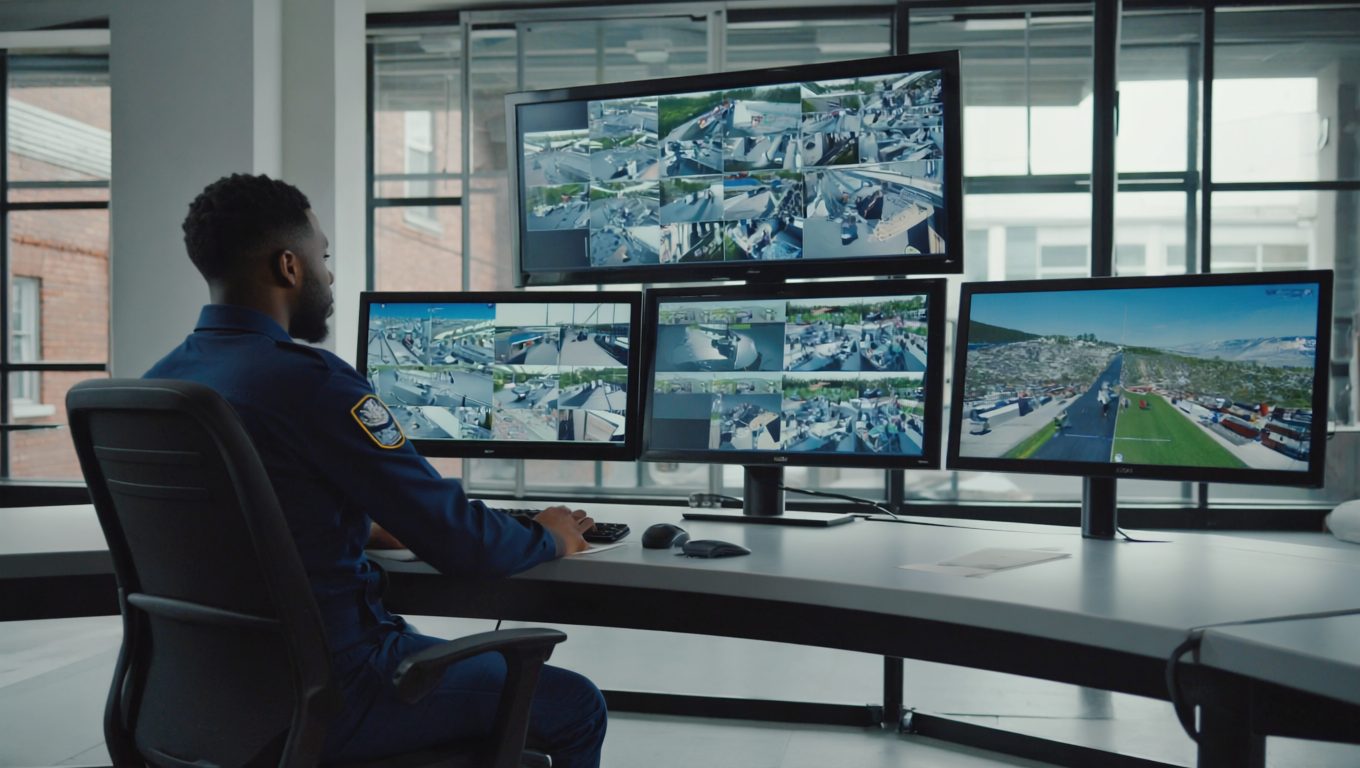
The security officer acts immediately. He calls 112, gives the location details, and begins coordinating access. He opens the main site gate so the ambulance can enter without delay. While doing that, he monitors the app dashboard. He can see which first responders have accepted the alert. Two have already acknowledged. One is heading to collect the AED. The other has grabbed the first aid kit and is already moving toward the location.
The security officer does not need to make additional calls or chase people down. The system shows him who is responding and where. He can focus entirely on external coordination because the internal response is already under way.
The ambulance arrives at an open gate with a clear route. The first responders are already on scene. The worker regains consciousness with support in place before the paramedics even reach him. The outcome is far better than it would have been under a traditional check-in protocol, where the next manual contact might have been thirty to sixty minutes away.
Automated detection systems eliminate that gap entirely. Where traditional safety protocols rely on scheduled check-ins, an automated lone worker alarm system for industry ensures a response begins within seconds of an incident, not after the next scheduled call-in window has passed.
Why Industrial Sites Are a High-Value Opportunity for Security Companies
Manufacturing accounts for 18.5% of all non-fatal workplace accidents across the EU, making it the single largest sector by accident share according to Eurostat data from 2023. Across the EU as a whole, over 3.500 workers die from workplace accidents each year. Those numbers are not abstract. They represent legal exposure, regulatory pressure, and genuine human cost for every site manager and operations director working in the sector.
Industrial clients are not looking for the cheapest option. They are looking for a solution that demonstrably reduces risk, satisfies their duty of care obligations, and can be explained clearly to their insurers and regulators. That creates a very different sales conversation than selling a CCTV system to a retail chain. The decision-maker understands the consequences of failure. They are motivated to invest properly.
For a security company, that means stronger margins, longer contract terms, and a client base that values reliability over price. A single industrial site might require twenty, fifty, or even more devices. Multiply that by a recurring monthly fee and the maths become compelling quickly. The personal safety platform that underpins this kind of deployment is designed to scale exactly like that, from a single pilot site to a full portfolio of industrial clients, without operational complexity multiplying at the same rate.
The Hardware and Platform Stack: How It All Fits Together
The TWIG ONE is purpose-built for demanding industrial environments. It is a rugged, dedicated device designed to be worn on the body. It combines GPS for outdoor location, Bluetooth, Wi-Fi and SRD for indoor beacon connectivity and a range of automatic detection capabilities including man down, no-movement detection, and panic alarm. Workers do not need to remember to press anything. The device monitors continuously and acts on their behalf when they cannot act themselves.
Dedicated hardware matters in this context. Consumer smartphones are not suited enough for industrial safety applications. They depend on workers having their phone with them, charged, and with the app running correctly. Often it is also the case that a personal smartphone is not allowed on site. A dedicated industrial worker safety alarm device removes all of those variables. The device is the safety tool. That is its sole purpose.
Managing a fleet of devices across one or more industrial sites requires a clear system. The device management platform allows a security company to oversee every device in its client portfolio from a single interface. Battery status, device assignment, firmware version, and alarm history are all visible and manageable without requiring on-site visits for routine administration. That matters when a client has fifty devices across a site and expects professional oversight as part of the service.
For first responders and security officers working in an app-based role, the experience is straightforward. Alarms arrive as push notifications with clear information attached. Accepting an alarm is a single tap. The platform handles the coordination layer, so the humans involved can focus on the physical response rather than managing communications.
Indoor Location Tracking: Why Beacons Change Everything on Industrial Sites
Outdoor GPS works well in open environments. It does not work inside a large industrial building. A worker who collapses inside a factory hall, a warehouse, or a processing facility cannot be located by satellite alone. That gap is where traditional lone worker solutions often fall short.
The beacon-based indoor location system resolves this directly. Small beacons are installed throughout the site at fixed points, or the already available Wi-Fi network can be used. When a worker wearing a TWIG ONE device is within range of a beacon, the system records their position relative to that beacon. When a man down alarm triggers, the platform knows which beacon was most recently in range, and maps that to a named location on the site layout.
The result is that colleagues and the security officer receive an alarm that says where the worker is, not just that something has happened. On a large industrial site, that distinction can mean the difference between a two-minute response and a fifteen-minute search. The site beacon management process involves mapping the facility, positioning beacons at logical intervals, and integrating those locations into the platform. Once configured, the system runs continuously without manual intervention.
This is not a theoretical capability. It is central to making the use case described above actually work. Without indoor location, a first responder receives an alarm but not a destination. With it, they run directly to the right part of the building.
What This Means for Your Margins and Monthly Recurring Revenue
Industrial sites represent one of the most commercially attractive segments for security companies adding man down detection to their service offering. Consider a mid-sized manufacturing facility with forty workers requiring device coverage. At a realistic monthly recurring fee per device, that single site generates meaningful predictable revenue every month, for the duration of the contract. Industrial clients do not churn quickly. Safety solutions become embedded in their operations, their training, and their compliance documentation.
The white-label model means the security company owns that client relationship entirely. The platform runs under the company’s own brand. The client sees their security partner delivering a sophisticated, technology-led service. They do not see a third-party provider behind it. That protects the account and positions the security company as a complete safety partner rather than a hardware reseller.
When presenting this to industrial clients, the relevant framing is simple. Existing safety protocols depend on humans remembering to check in, or colleagues noticing an absence. Those protocols have gaps of thirty to sixty minutes or more. An automated man down system closes those gaps entirely. It does not replace the people. It ensures the people respond at the right moment, with the right information, before the situation becomes irreversible.
Common objections in this sector tend to centre on complexity and integration. Industrial operations managers worry about disruption to their processes. The response to that is straightforward. Device deployment is simple. Workers wear a device. The platform handles the rest. There is no complex integration with existing systems required to get the core safety function operational. A site can be live quickly, and staff training is minimal because the devices require almost no active input from the worker.
The security company that can walk into an industrial client meeting and demonstrate exactly how a man down alarm works, who receives it, what they see, and how the response unfolds, is not selling hardware. It is selling a safety outcome. That is a fundamentally different and more valuable proposition.
Based on a real Cuebly partner. Names have been changed for privacy.
Frequently Asked Questions
What is a man down alarm on an industrial site?
A man down alarm is triggered automatically when a worker’s device detects a fall, prolonged lack of movement, or another indicator that the worker may be incapacitated. On an industrial site, this alarm is sent simultaneously to colleagues, designated first responders, and a security officer, along with the worker’s precise indoor location so that response can begin immediately without a manual search.
How does indoor location work with a man down system?
Indoor location is determined using beacons installed throughout the site. The worker’s device communicates with the nearest beacon and the platform uses that data to identify a named location within the building. When an alarm triggers, that location is included in the notification sent to responders, removing the need to search the site. The site beacon management process involves mapping the facility and positioning beacons at appropriate intervals during the initial setup.
Why use dedicated hardware like the TWIG ONE rather than a smartphone app?
Dedicated devices are more reliable in industrial environments. They do not depend on a worker remembering to carry a charged phone or keeping an app active in the background. The TWIG ONE is purpose-built for safety monitoring, with automatic man down detection, a long battery life, and rugged construction suited to demanding site conditions. For industrial lone worker protection, a dedicated device is the appropriate tool.
Can a security company offer this under their own brand?
Yes. The platform is designed to operate as a white-label service. The client sees the security company’s brand throughout. This protects the client relationship and allows the security company to position itself as a complete safety partner rather than a reseller of a third-party product. The underlying platform and device management infrastructure runs behind the scenes without being visible to the end client.
How quickly can an industrial site be set up with a man down alarm system?
Initial platform setup is fast. Beacon installation and device configuration depend on the size of the site, but a straightforward industrial deployment can typically be operational within a short period after the initial survey. The devices themselves require minimal training for workers, as the man down detection is automatic and does not rely on the worker taking any action during an incident.
What are the compliance benefits for industrial clients?
Industrial employers have a legal duty of care to protect lone and isolated workers. A documented, automated man down alarm system with indoor location tracking and recorded response times provides clear evidence that appropriate measures are in place. This supports compliance with occupational health and safety legislation, and can strengthen the company’s position with insurers. For many industrial clients, regulatory and insurance considerations are as significant as the immediate safety benefit.
Demo
Offer this to your clients, under your own brand
In a demo we show the platform and the app, with a situation from your own clients.
Keep reading
Related articles
Case Study
Night Security Guard Safety
A lone night watchman spots a break-in on camera — explore how the right safety alert system protects…

Case Study
Construction Site Worker Safety Alarm
Discover how automatic fall detection on construction sites helps security companies deliver faster, life-saving emergency responses for their…

Case Study
Personal safety solution for petrol stations and late night retail
Discover how personal alarm technology protects petrol station staff from aggressive customers and helps security companies build recurring…