

Lone worker safety: Healthcare – Protection for Community Care Teams
Community care workers visiting clients after dark face a challenge that rarely makes headlines but is felt every single working day. For security companies with control room infrastructure already in place, this sector represents both a genuine opportunity to provide meaningful protection and a chance to build the kind of recurring, relationship-driven contracts that define a sustainable business.
The Situation
Home care organisations operate around the clock. Their staff, often lone workers, travel between private addresses, housing estates, and apartment blocks at all hours. Delivering everything from medication administration to personal care. In winter months, darkness falls by mid-afternoon, meaning the majority of evening visits happen in low-light conditions, in areas that range from quiet suburban streets to less predictable urban environments.
These workers carry out intimate, skilled work under time pressure. They are focused on the person in front of them, not on their own safety. Yet the reality of their working environment means risk is ever-present. A care worker arriving at a housing block may encounter groups of young people gathered in stairwells or outside entrances. In most cases, there is no threat. But the uncertainty is real, and the worker has no immediate way to signal concern or summon support without escalating a situation that may not yet require it.
Care organisations understand this risk. Many have duty managers and on-call supervisors. But what they often lack is a structured, monitored safety system that gives their staff a discreet, reliable means of staying connected to professional support throughout a shift.
The Challenge
The specific problem is not a lack of awareness. Care managers know their staff face these moments. The problem is the gap between awareness and capability. Generic check-in systems require staff to remember to make a call. Buddy systems rely on colleagues being available. Basic panic button devices may alert someone, but without a monitored control room behind them, the response chain is unclear and often slow.
For the organisation, the consequences of an inadequate system are significant. Staff retention suffers when workers feel unsupported. Incident reporting becomes reactive rather than preventative. And duty-of-care obligations (which are taken seriously by care regulators) are difficult to demonstrate through informal arrangements alone. Beyond the human cost, there is a reputational and legal exposure that responsible care managers are acutely aware of.
What they need is professional, monitored protection. What they have often been told is that this kind of service is the domain of specialist providers. Not the security company they already trust for their building access control or CCTV.
How It Works in Practice
Consider a realistic scenario. Sarah is an experienced care worker employed by a regional home care provider. Her shift runs from 16.00h to 22.00h, and in December that means every visit after half past four happens in darkness. On this particular evening, her fourth visit is to an elderly client in a ground-floor flat within a larger apartment complex. It is a routine call: medication and a welfare check. But to reach the entrance, she needs to walk past a group of young people gathered near the car park.
Before she gets out of her car, she activates the personal alarm function on her mobile device. The action is deliberate but takes only a moment. A discrete press of a clearly marked button within the app assigned to her by her employer. She is not calling anyone. She is not speaking. She is simply opening a silent, live audio connection to the control room.
At the control room, the operator receives a notification identifying Sarah by name, flagging her current GPS location, and indicating that a monitored session is active. The operator can hear ambient audio from Sarah’s device. There is no alarm sound, no flashing light, no indication to anyone around Sarah that she has activated anything at all. She steps out of the car, locks it, and walks calmly towards the building entrance.
The group of young people are gathered near the door. There is noise. Music, conversation, laughter. Sarah walks through without incident. The operator, listening throughout, hears nothing that warrants intervention. Sarah reaches her client’s door, knocks, and is admitted. The operator who has monitored the session throughout checks in briefly via the app. Sarah confirms she is safe, the session closes, and the operator offers a short, professional acknowledgement. She continues her shift with the certainty that if anything had developed differently, support was already listening.
Had Sarah encountered a situation that felt threatening. Like a confrontation, a fall or a medical emergency, the same connection that was listening discreetly would have become the channel for an immediate, informed response. The operator already knows her location. They already know her employer and the escalation protocol agreed at the point of contract. Response is not delayed by the need to establish context. It begins from a position of full situational awareness.
The technical infrastructure behind this experience is straightforward to manage. Each worker is assigned a profile within the platform. Schedules, escalation contacts, and location data are all configured in advance. The control room interface is familiar: it presents information in the same structured way as other monitored services. There is no separate system to learn, no hardware to manage at scale, and no dependency on the worker carrying specialist equipment beyond their standard-issue work phone.
The Impact
Care organisations that implement structured lone worker monitoring report changes that go beyond incident statistics. Staff report a measurable shift in confidence. Not because the risk disappears, but because they no longer feel isolated when facing it. This has a direct effect on recruitment and retention in a sector where both are persistently difficult.
Duty managers describe a reduction in the informal anxiety that surrounds evening shifts. Knowing that workers are professionally monitored, rather than relying on ad-hoc check-in calls, changes the culture of how safety is discussed and managed within the organisation.
From a compliance perspective, the system generates a verifiable record of every monitored session: timestamp, location, duration, and any actions taken. For organisations subject to regulatory oversight, this documentation supports their duty-of-care obligations in a way that informal systems simply cannot.
The care organisation’s relationship with its security provider also deepens. Rather than a transactional vendor arrangement, the provider becomes embedded in the organisation’s operational safety framework. A position that is considerably more resilient to competitive pressure.
What This Means for Security Company Owners
When presenting this to healthcare and domiciliary care clients, the conversation is most effective when it starts not with technology but with the worker’s experience. Decision-makers in this sector respond to solutions that demonstrably support their staff and satisfy their regulatory obligations.
- The proposition is complete: monitored protection, not just a device or an app
- It sits within existing infrastructure: no need for the client to manage a separate platform or provider
- It is delivered under your brand: the client relationship stays with you
- Contract structures are naturally recurring: monthly per-user pricing scales with the client’s workforce
- Compliance documentation is built in: a significant advantage in regulated sectors
The common objection that personal alarm monitoring is a specialist niche requiring specialist infrastructure is precisely what a white-label platform resolves. Security companies with an operational control room already have the most important component. The platform provides the rest, without the complexity of building it independently or the margin erosion of working through an intermediary.
Based on a real Cuebly partner. Names have been changed for privacy.
Demo
Offer this to your clients, under your own brand
In a demo we show the platform and the app, with a situation from your own clients.
Keep reading
Related articles
Case Study
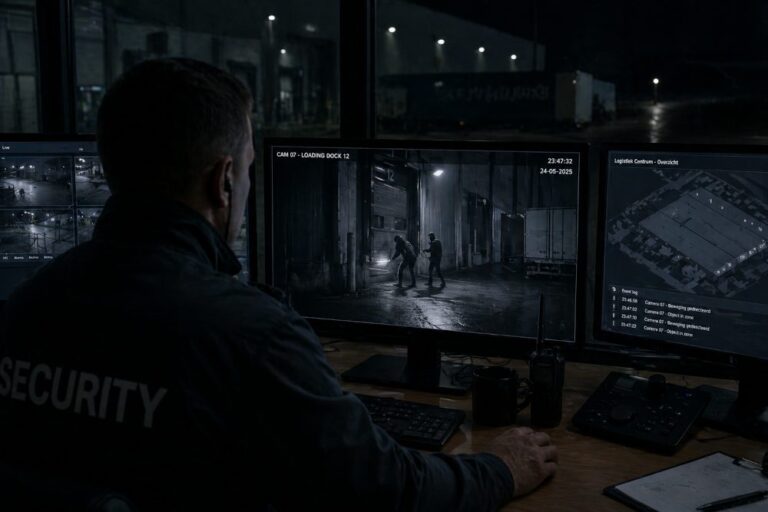
Night Security Guard Safety
A lone night watchman spots a break-in on camera — explore how the right safety alert system protects…
Case Study
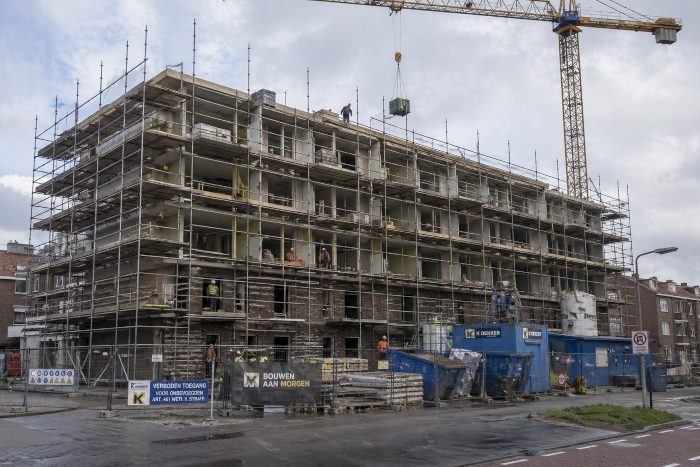
Construction Site Worker Safety Alarm
Discover how automatic fall detection on construction sites helps security companies deliver faster, life-saving emergency responses for their…
Case Study
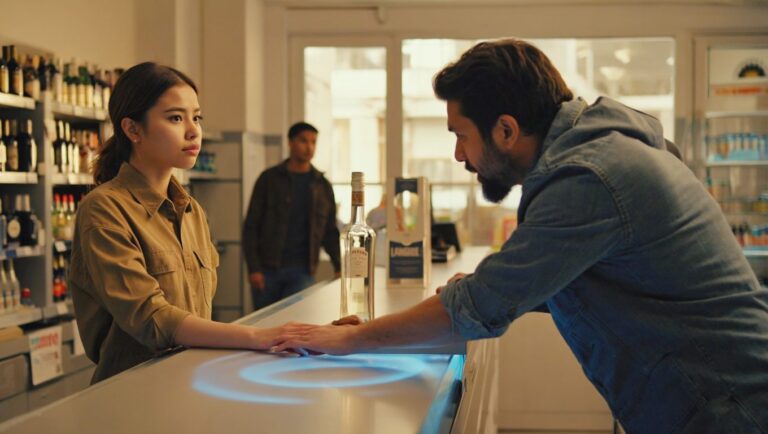
Personal safety solution for petrol stations and late night retail
Discover how personal alarm technology protects petrol station staff from aggressive customers and helps security companies build recurring…