
Personal safety solution for petrol stations and late night retail
Petrol stations and late-night convenience stores sit at the sharp end of retail risk. Staff work alone or in pairs, often during unsociable hours, regularly refusing service to customers who are already agitated. When a situation turns aggressive, the margin between a difficult moment and a dangerous one can be seconds. This use case explores how a personal safety solution for petrol station retail environments works in practice, and why security companies are building profitable recurring revenue contracts by delivering it.
The Friday Night Scenario Every Petrol Station Manager Dreads
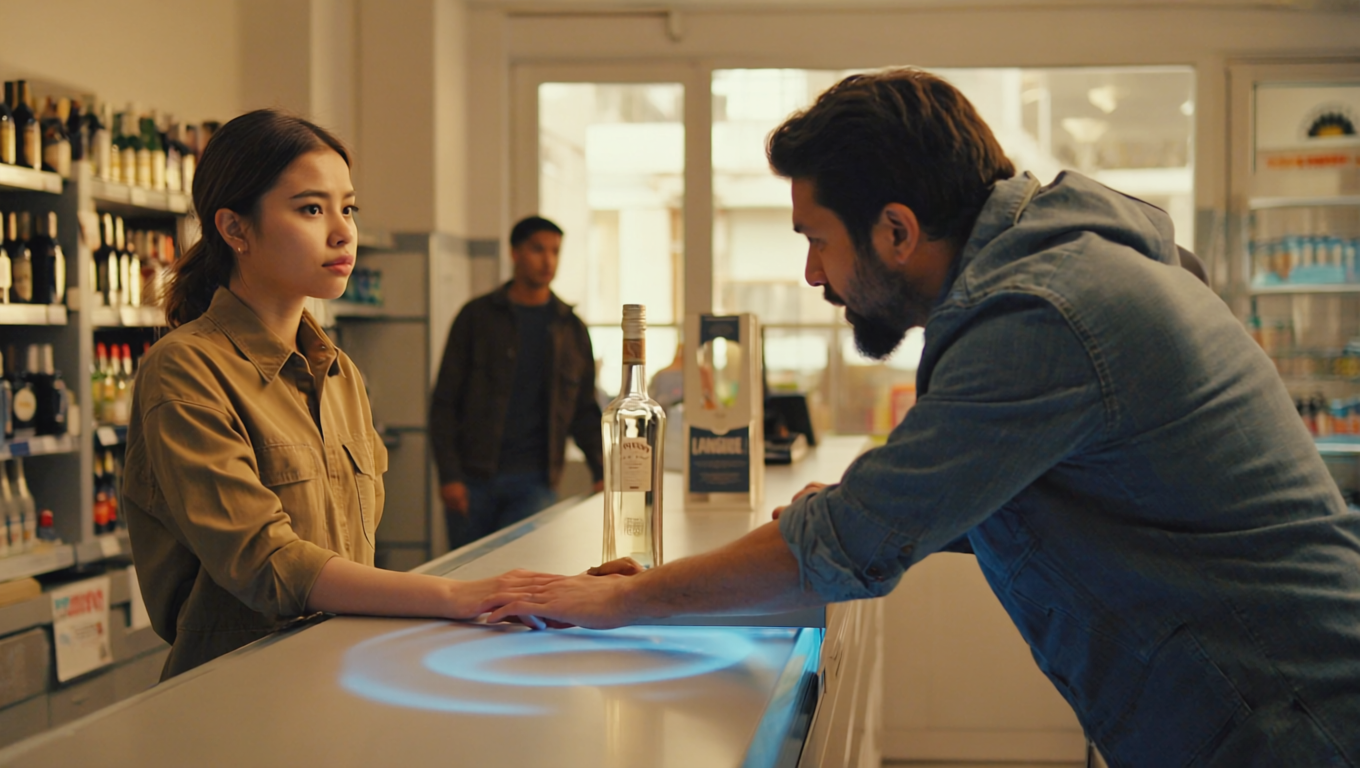
Picture a petrol station forecourt on a Friday evening. The shop is busy. One member of staff is managing the till. A second is restocking in the back. A customer walks in, already unsteady on his feet, and asks for a bottle of spirits. The cashier is required by law to refuse. He does not take it well.
His voice rises. He leans across the counter. The cashier is alone at the front of the shop, visible to no one who can help immediately. There is no script for this moment. There is no colleague close enough to notice. There is no manager on site.
According to Convenience Store magazine, one in four retail workers now face aggressive or violent behaviour from customers, with over 16% dealing with angry customers on a daily basis. A separate 2025 study of retail workers in Europe found that 20% experience abusive behaviour every week. Of those, 35% describe incidents as violent in nature.
This is not an edge case. This is the working reality for thousands of retail staff across Europe. The scenario above happens every Friday night, in hundreds of locations, to workers who are often young, and almost always without a reliable way to call for help without escalating the situation further.
Shouting for help inflames the confrontation. Reaching for a visible phone signals that you are about to call the police, which can trigger a more aggressive response. Doing nothing and hoping it resolves itself is not a safety strategy.
What these workers need is a way to summon help without the aggressor knowing it has been summoned. That is where a well-deployed lone worker safety retail security system changes everything.
Why a Panic Button Under the Counter Is Only Half the Solution
Many retail operators have installed some form of panic button. The hardware exists. The problem is what happens after the button is pressed. In too many cases, the alert goes to a monitoring centre that has no relationship with the site, no contextual knowledge of who is working, and no clear escalation path. Response times are slow. Follow-up is inconsistent. Staff press the button once, nothing useful happens, and they never use it again.
This is the core challenge that needed solving. The hardware was present. The process was absent.
A petrol station operator with six locations across two cities had exactly this problem. Incidents were being logged, but responses were not coordinated. A manager would receive a call after the fact, once the situation had already resolved or escalated. Staff had lost confidence in the system. Two members of staff had resigned following incidents, citing feeling unsupported. The human cost was visible. The business cost, in recruitment and retraining, was significant.
The operator needed more than a retail worker panic button solution. They needed a complete safety response workflow, delivered consistently across all sites, with real-time visibility for the people responsible for their staff.
What they did not want was complexity. No new software platforms to learn. No dependency on a generic national monitoring centre that did not know their business. They wanted their trusted local security company to own the entire response, from the moment the button was pressed to the moment the situation was resolved and documented.
What a Complete Staff Safety Response Actually Looks Like
Laura works the evening shift at one of the operator’s busiest sites. She is 23. She has been briefed on one thing: if anything happens, press the button under the counter.
On a Friday evening, a regular customer comes in, already visibly intoxicated. He wants alcohol. She refuses. He does not leave. His tone becomes threatening. He is blocking the counter space and raising his voice.
Laura presses the discrete button fitted beneath the till. It takes less than a second. Nothing visible changes in the shop. No alarm sounds. No lights flash. The customer has no idea anything has happened.
Within seconds, her colleague in the stockroom receives a silent alert on his device. He knows immediately that Laura needs support at the front. He walks through, not rushing, not escalating, simply appearing as a second visible presence. The dynamic in the shop changes instantly.
Simultaneously, the site manager receives a notification on his phone. He calls Laura’s number, which she answers on her earpiece, allowing her to stay connected without making a visible phone call. He can hear what is happening and make a judgement call in real time.
The security company’s control room also receives the alert. They have the site profile loaded: address, layout, on-duty staff names, escalation contacts, and the preferred response protocol agreed with the operator. If the situation does not resolve within the agreed timeframe, a physical response is dispatched. The control room does not need to make calls to find out what is happening. The system has already told them.
The customer, now facing two members of staff and aware that the situation is no longer going the way he intended, leaves. The whole sequence from button press to resolution takes under four minutes.
Laura documents the incident through the same platform. The manager reviews it remotely. The security company has a full audit trail. No paperwork. No chasing. No gaps in the record.
The indoor location capability within the personal safety platform means that if a worker is elsewhere on site when an incident occurs, the control room can see their position immediately. For larger forecourt sites or attached car washes, this matters. The SIM and connectivity layer ensures the alert goes through reliably, even on sites where Wi-Fi coverage is patchy or non-existent. This is a common problem in retail environments and one that makes a dedicated mobile connection essential rather than optional.
For operators managing multiple sites, the device management capability allows the security company to oversee all panic button devices across every location from a single dashboard. If a device needs a firmware update, a battery check, or a configuration change, it is handled centrally. The operator does not need to involve their own IT team. The security company owns the end-to-end relationship.
The Business Case: What Security Companies Are Earning From Retail Safety Contracts
The lone worker protection services market in Europe and North America was projected to reach €260 million by 2021, according to IoT Business News market analysis. That projection was made in 2017. The market has grown considerably since, accelerated by post-pandemic increases in retail aggression and tightening health and safety obligations on employers.
For a security company operating in this space, the commercial model is straightforward. A retail chain with six locations, each deploying staff safety devices across two or three workers per shift, represents a meaningful recurring monthly contract. The security company delivers the hardware, manages the platform under its own brand, monitors the alerts, and coordinates physical response when required.
This is not a one-off installation fee. It is a predictable recurring revenue contract, renewed monthly or annually, that grows as the operator adds sites. The security company that set up Laura’s employer signed a contract worth approximately €900 per month for six locations. That is the kind of revenue that compounds. Two similar clients double it. Five clients make it a significant revenue line that requires no additional headcount to service.
The white-label structure is important here. The security company presents this capability entirely under its own brand. The operator is buying from a trusted local partner, not from a technology company they have never met. That relationship is the competitive advantage. A national platform provider cannot replicate it.
When a retail chain asks its security partner about staff safety solutions, the answer is now yes. Not “we don’t do that” or “you’ll need to call someone else.” The security company that can say yes to that question, confidently and completely, takes the contract. The one that cannot sends the client to a competitor. That competitor now has a recurring contract and a stronger relationship with a client that could grow into physical guarding, CCTV monitoring, and other services.
The white-label personal alarm system is not just a product. It is the reason the client stays, expands, and refers others.
How to Deploy a White-Label Staff Safety Platform Without Technical Chaos
The concern most security company owners raise at this point is operational. They are not technology businesses. They do not want to become technology businesses. They want to deliver a service that works reliably, without building a technical team or managing infrastructure.
The deployment model for this type of platform is designed around that constraint. Devices are pre-configured before they arrive on site. The security company’s branding is applied to the platform from day one. Staff training at the retail site takes under an hour. The control room integration is handled during onboarding, not left to the security company to figure out independently.
A realistic timeline for a security company adding this capability is three to four weeks from decision to first live client. That includes platform setup, device configuration, control room integration, and staff briefings at the client site. It does not require hiring a new technical role or building a custom integration.
For the retail operator, deployment across multiple sites is managed centrally. Adding a new location does not mean starting the process again from scratch. The device management layer scales without adding proportional overhead. Going from two sites to twelve does not mean six times the admin. That is what allows a security company to grow this revenue line without growing its cost base at the same rate.
When presenting this to retail clients, the emphasis should be on three things. First, the simplicity for staff: one button, no training burden, no complicated procedure. Second, the speed and coordination of the response: not just an alert, but an organised sequence of actions that resolves the situation. Third, the audit trail: every incident documented automatically, supporting compliance obligations and insurance requirements.
Those three points address the objections most retail operators raise. They have had bad experiences with complicated systems that staff do not use. They have had alert systems that generate noise without generating responses. They want something that works in the moment and protects them legally afterwards. A well-deployed staff safety aggressive customers solution delivers all three.
Frequently Asked Questions
Does the panic button work if the petrol station has poor Wi-Fi coverage?
Yes. Devices designed for retail safety environments use a dedicated SIM and mobile connectivity rather than relying on the site’s Wi-Fi. This ensures the alert reaches the control room and the designated responders regardless of local network conditions. Poor or absent Wi-Fi is a common issue at petrol station forecourts and is one of the primary reasons SIM-based connectivity is recommended for always-on personal safety devices in retail settings. More detail on connectivity options is available at /solutions/sim-and-connectivity/.
How are devices managed across multiple retail locations?
A central device management dashboard allows the security company to oversee all devices across every client site from a single interface. Battery status, connectivity, firmware updates, and configuration changes can all be handled remotely. This means adding a new site does not require a site visit for device setup in most cases. For security companies managing retail chains with multiple locations, this is what makes the model scalable without proportional overhead. Full details are at /solutions/device-management/.
What happens if the alert is triggered accidentally?
Accidental activations are handled through the same escalation workflow, but with a defined cancellation window. If the staff member confirms via the platform that the alert was accidental within a short timeframe, the escalation is stopped before a physical response is dispatched. Every activation, including cancelled ones, is logged for the audit trail. Retail operators find this reassurance important when briefing staff on using the system confidently.
Can the security company brand this entirely under their own name?
Yes. The platform is delivered as a fully white-label solution. The retail client sees only the security company’s branding throughout: on the app, on the control room interface, and on all communications. This protects the security company’s client relationship and positions them as the complete safety partner rather than a reseller of a third-party product. There is no co-branding with the underlying technology provider.
How quickly can a security company go live with this capability?
A realistic timeline from decision to first live client is three to four weeks. This includes platform configuration under the security company’s brand, device setup, control room integration, and staff briefings at the client site. The process does not require technical expertise within the security company. Onboarding support is provided to ensure the control room integration and escalation workflows are correctly configured before any devices go live.
What are the legal obligations for retail employers around staff safety?
Employers in the UK, Belgium, Ireland, and the Netherlands have statutory obligations to assess and manage risks to lone workers and staff in high-risk customer-facing roles. Refusing alcohol service, handling cash, and working evening shifts are all recognised risk factors. A documented personal alarm system, with an audit trail of incidents and responses, supports compliance with health and safety legislation and can strengthen an employer’s position in the event of an insurance claim or employment tribunal. Security companies should note that this compliance angle is often the trigger that moves a retail client from consideration to commitment.