
SIM Card Management for Safety Deployments
Cuebly’s SIM card management platform enables system integrators to provision, monitor, and control IoT connectivity for TWIG, Emerit, and multi-vendor safety devices across customer deployments. Activate SIM cards over-the-air, configure APN settings remotely, and monitor data usage across all customer environments from a centralised dashboard.
Multi-network SIM cards with automatic provider selection ensure connectivity even during network outages. Set policies and roaming rules per SIM card to prevent bill shock. Map SIM cards to devices and customer environments for clean reporting and automated billing.
Built for system integrators managing connectivity across multiple customers with diverse geographic coverage requirements. Post-billing model improves cash flow: collect revenue from customers before paying Cuebly’s connectivity costs at month-end.
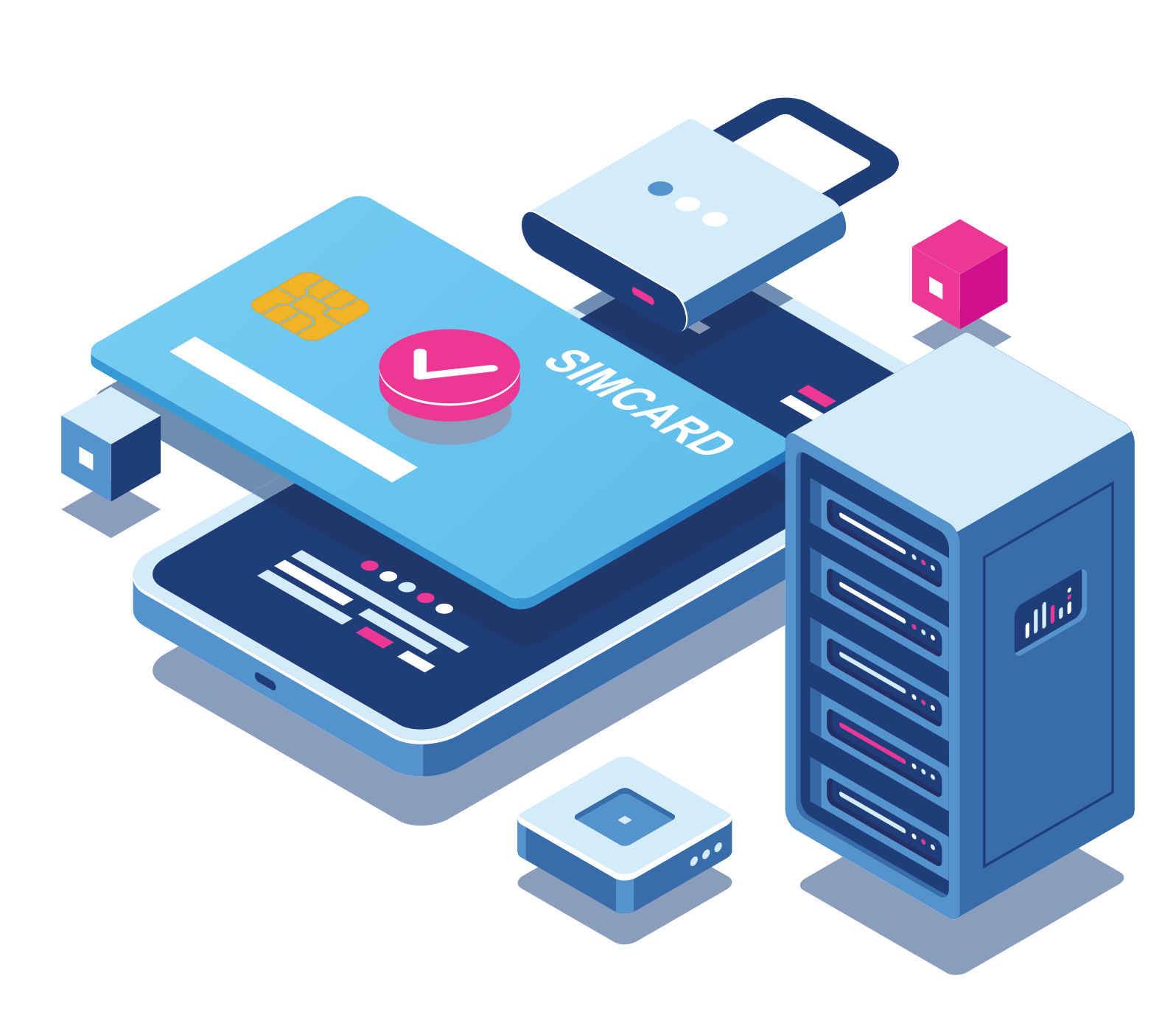
Why Centralised SIM Management Matters for IoT Deployments
Safety devices require reliable connectivity to transmit location data, alarm notifications, and status updates. When connectivity fails, devices become invisible. Emergency responders can’t locate workers. Alarms don’t reach monitoring centers. Device status remains unknown.
Managing connectivity across multiple customers, device types, and geographic regions creates operational complexity without centralised SIM management.
Operational Challenges Without Central Management
Multiple SIM Provider Portals: Managing SIM cards from different carriers requires logging into separate provider portals. Vodafone’s portal for Customer A’s devices. T-Mobile’s portal for Customer B’s devices. Orange’s portal for Customer C’s international deployments. Each portal has different interfaces, workflows, and reporting formats.
No Device-to-SIM Visibility: Carrier portals show SIM card data usage but don’t know which physical device uses each SIM. When data consumption spikes unexpectedly, you can’t quickly identify which customer, which deployment, or which specific device is causing the issue. Troubleshooting requires cross-referencing ICCID numbers across multiple systems.
Manual Activation Workflows: Traditional SIM activation requires physical access to devices or manual configuration processes. Ship SIM cards to field locations. Technicians insert SIM cards, power devices, wait for network registration, and manually verify connectivity. Time-consuming and error-prone at scale.
Reactive Cost Management: Without real-time usage monitoring and automated policies, unexpected costs surprise customers. Devices consume more data than anticipated (for instance due to over the air firmware upgrades). Roaming charges accumulate during international deployments. Monthly bills arrive significantly higher than estimates, damaging customer relationships.
Cuebly’s Centralised Approach
Cuebly consolidates SIM management across all customers and devices into a unified platform. Activate or deactivate SIM cards remotely. Monitor usage in real-time. Set automated policies that prevent cost overruns. Map SIM cards to devices and customer environments for complete visibility. Generate per-customer usage reports for accurate billing and chargeback.
System integrators using Cuebly SIM management reduce operational overhead while improving service reliability and cost predictability for their customers.
Complete SIM Lifecycle Management
From initial SIM activation to end-of-life decommissioning, Cuebly manages every aspect of IoT connectivity for safety device deployments.
Over-the-Air (OTA) Activation & Configuration
Activate SIM cards remotely without physical device access. When a Cuebly-managed SIM card is inserted into a TWIG or Emerit device and powered on, the device automatically registers to the network and connects to the Cuebly platform.
APN (Access Point Name) configuration is done automatically by the Cuebly platform. The device receives correct server addresses, authentication credentials, and protocol settings via SMS or IP commands. No manual configuration required at deployment sites.
For bulk deployments, scan SIM card ICCID barcodes and device IMEI barcodes. The platform maps SIM-to-device relationships automatically. Configuration applies to all devices simultaneously. Deploy 100 devices across 10 customer sites without manual per-device setup.
OTA activation supports international deployments. Ship devices with Cuebly SIM cards directly to customer locations anywhere in Europe. Devices activate automatically upon power-on, regardless of country or carrier network. No local technician visits required.
Real-Time Usage Monitoring
Monitor data consumption across all SIM cards from a centralised dashboard. View usage per SIM card, per device, per customer environment, or aggregated across your entire customer base.
Live Session Status: See which devices are currently connected. Offline devices appear immediately, enabling rapid troubleshooting.
Historical Usage Analytics: Track data consumption trends over time. Identify devices consuming more data than expected. Understand seasonal patterns or usage spikes correlated with specific events (emergency activations, firmware updates, etc.).
Usage Reports: Generate per-customer reports showing data consumption, active SIM count, and connectivity costs. Export reports for customer billing, internal chargeback, or financial analysis.
Granular visibility enables proactive management. Spot anomalies before they impact costs or service quality.
Automated Policies & Alerts
Configure automated alerts that enforce cost controls and detect anomalies:
Usage Caps: Set maximum data allowances per SIM card or per customer environment. When thresholds are reached (e.g., 80% of monthly limit), the platform sends alerts to administrators.
Functionality Policies: Control 2G/3G/4G/5G behaviour per SIM card. Allow connecting to specific network types while blocking others. Forcing a device to work over 4G only for instance. This is very helpful during the 2G and 3G sunset.
Anomaly Detection: Alert when SIM card usage patterns deviate significantly from historical norms. If a SIM card suddenly consumes data above a specific threshold, administrators receive immediate notifications. Investigate potential device malfunctions, firmware issues, or security compromises.
Device Mismatch Alerts: Track which physical device is using each SIM card. If a SIM card appears in a different device than expected (IMEI mismatch), trigger security alerts. Detects SIM card theft, unauthorised device swaps, or inventory management errors.
Automated policies reduce manual monitoring overhead while preventing cost surprises and service disruptions.
Multi-Network Provider Selection
Cuebly SIM cards support multiple carrier networks within each country. Devices automatically select the strongest available network, switching between providers as needed for optimal connectivity.
Redundancy & Reliability: If one carrier experiences a network outage, devices automatically fail-over to alternative carriers. No service interruption. No manual intervention required. Critical for safety applications where connectivity failures could delay emergency response.
Non-Steered Roaming: Device firmware controls network selection, not carrier preferences. Devices choose networks based on signal strength and availability, ensuring best possible connectivity. Unlike carrier-steered roaming, which may prioritise partner networks over optimal connections.
Geographic Coverage: Multi-network support extends coverage into areas where single carriers have weak signals. Rural locations, industrial facilities with RF interference, and underground environments benefit from automatic provider switching.
Standard configuration: a minimum of 2 networks per country. Extended coverage option: 4+ networks for maximum reliability in mission-critical deployments.
Customer Environment and Device Integration
Map SIM cards to devices for complete operational visibility:
Device-SIM-Customer Mapping: Link each SIM card’s ICCID to its corresponding device IMEI, which automatically links it to the correct customer. View which customers use which SIM cards, data consumption per customer, and connectivity status per deployment.
Billing Automation: Generate per-customer usage reports automatically. Export data for invoicing systems. Many integrators bill customers based on per-device monthly fees that include connectivity. Usage reports verify billing accuracy and provide chargeback documentation.
Access Control: Reseller environment provides cross-customer visibility for integrators managing entire portfolios.
Integration with customer environments ensures SIM management aligns with operational workflows rather than operating as a separate administrative silo.
Multi-Network Connectivity for Maximum Reliability
Single-carrier SIM cards create single points of failure. When that carrier experiences a network outage, devices lose connectivity. For safety applications, connectivity failures can delay emergency response or prevent alarm transmission.
Cuebly’s multi-network SIM cards mitigate this risk through automatic carrier redundancy.
How Multi-Network SIMs Work
Each Cuebly SIM card has roaming agreements with at least 2 mobile carriers per country. When the device powers on, it scans for available networks and connects to the strongest signal. If the primary carrier’s network degrades or fails, the device automatically switches to alternative carriers.
Example: In the Netherlands, a device might primarily connect to KPN’s network. During a KPN network outage, the device automatically fail-overs to Vodafone or T-Mobile networks. Service continuity maintained without manual intervention.
Non-Steered Roaming
Unlike traditional roaming where carriers prioritise partner networks (potentially sacrificing signal quality for commercial relationships), Cuebly uses non-steered roaming. Devices control network selection based purely on signal strength and availability. This ensures optimal connectivity regardless of carrier partnerships.
Coverage Benefits
Multi-network support extends geographic coverage. Rural areas, underground locations, industrial facilities with RF interference; these challenging environments benefit from having multiple network options. If one carrier provides weak coverage in a specific location, devices automatically use carriers with stronger signals.
For mission-critical safety applications, non-steered multi-network redundancy is essential infrastructure.

Post-Billing Model: Better Cash Flow for Your Business
Cuebly uses post-billing: you’re invoiced at the end of each month for actual SIM card usage. This creates a significant cash flow advantage for system integrators.
How Post-Billing Benefits Your Business
Traditional Model (Pre-Billing): Pay connectivity providers at the start of the month. Bill customers mid-month or end-of-month. Your cash is tied up in advance payments before customer revenue arrives.
Cuebly Model (Post-Billing): Bill your customers at the start or middle of the month. Collect payment from customers. Receive Cuebly’s invoice at month-end for actual usage. Pay after you’ve already collected revenue.
This reversal improves working capital. You’re not financing connectivity costs while waiting for customer payments. Particularly valuable when scaling rapidly. Adding new customers doesn’t require upfront capital to cover their connectivity costs.
Accurate Billing Based on Actual Usage
Post-billing means you’re invoiced for actual data consumption, not estimated or prepaid allowances. If customer usage is lower than anticipated, you pay less. If usage exceeds estimates, you’re billed accurately for actual consumption. No reconciliation of prepaid credits or overage charges at end of billing cycles.
Combined with per-customer usage reports, post-billing supports transparent customer billing and healthy profit margins on connectivity services.
SIM Management Built for System Integrators
Cuebly’s SIM management is designed for system integrators managing connectivity across multiple customers with diverse requirements.
Cross-Customer Fleet Visibility
Monitor data usage, connectivity status, and costs across all customers from the reseller environment. Identify customers approaching data limits. See which customers consume most connectivity.
Customer-Specific Policies
Configure different usage alerts per customer environment:
– Customer A gets 100MB per device per month with SMS and Voice disabled.
– Customer B gets 250MB with Voice enabled.
– Customer C gets unlimited data.
Alert policies align with each customer’s service tier and pricing model.
Automated Billing Reports
Generate per-customer usage reports at month-end. Export Excel for invoicing systems. Reports include data consumption per SIM, active SIM count, and connectivity costs. Transparent reporting supports accurate customer billing and reduces billing disputes.
Scalable Operations
Managing 10 customers with 500 total SIM cards requires similar effort to managing 50 customers with 5,000 SIM cards. Centralised management, automated alerts, and bulk operations scale efficiently. Add new customers without proportional increases in administrative overhead.
System integrators choose Cuebly for SIM management that scales alongside their business growth.
How SIM Card Management Works
Reach maximum scalability with Cuebly SIM card management.
Frequently asked questions
Ready to Simplify SIM Card Management?
Stop juggling multiple carrier portals and manual activation workflows. Manage connectivity for TWIG, Emerit, and multi-vendor devices from one centralised platform. Activate remotely, monitor usage in real-time, and control costs with automated alerts.
Book a demo to see SIM card management in action. We’ll show you OTA activation, multi-network connectivity, and how the post-billing model improves your cash flow.