
Why Man Down Protection is Non-Negotiable for Lone Worker Safety
Introduction: The Unseen Vulnerabilities of Working Alone
In an increasingly dynamic and distributed global workforce, the number of individuals working alone is on the rise. From utility technicians in remote fields to security guards on overnight shifts and community healthcare providers making home visits. These lone workers are the backbone of countless industries. Yet, their isolation presents a significant and often unseen vulnerability. When an accident or medical emergency occurs, there is no colleague nearby to call for help. In these critical moments, silence is the greatest threat. This reality makes proactive safety measures not just a benefit, but a fundamental requirement. Man Down protection is the definitive solution to this challenge. It acts as a vital digital lifeline, turning a lone worker’s vulnerability into constant, automated vigilance.
The Rise of the Lone Worker and Inherent Risks
The modern economy thrives on flexibility and efficiency. Those trends have fuelled the growth of lone working roles across nearly every sector. However, this inherently magnifies risk. A minor slip in a busy office can be life-threatening for someone working alone. Without immediate assistance, the consequences of accidents, sudden illness, or even external threats are amplified. This places a profound responsibility on employers. They must bridge the safety gap created by physical distance.
What is Man Down Protection and Why It Matters Now More Than Ever
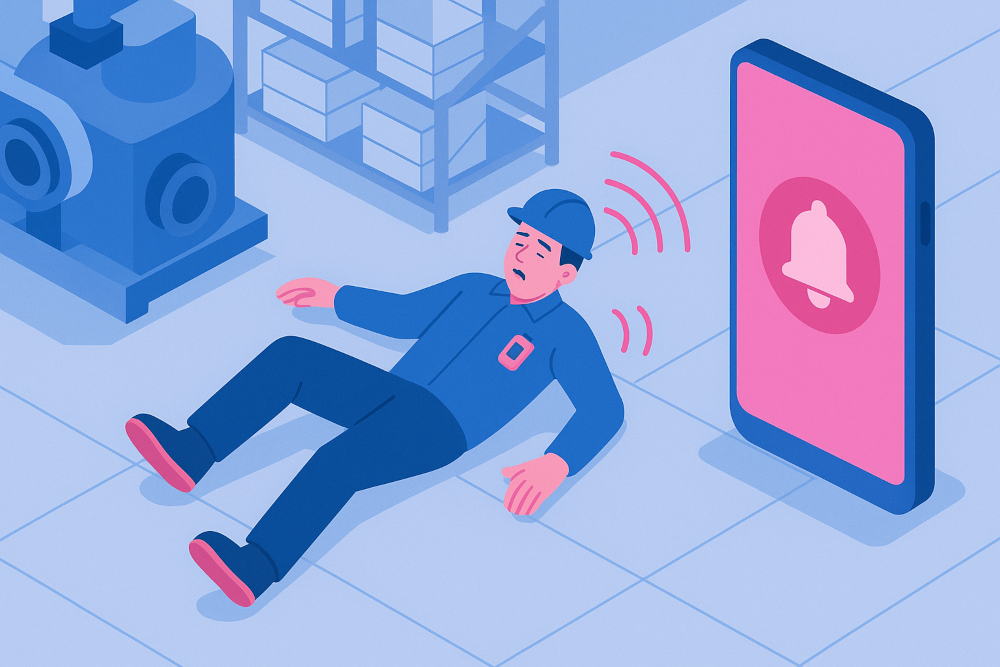
Man down protection is an automated system that detects if a person has fallen or becomes unconscious. Built into safety devices or apps, this technology uses sensors to detect incidents and automatically send alerts. These systems have evolved from a luxury to a necessity due to critical safety needs and strict regulations. They represent a critical layer of an organisation’s duty of care. Ensuring that help is dispatched even when the worker is unconscious or otherwise unable to call for it.
The “Lifeline” Analogy: A Critical Safety Net
Think of a Man Down system as a digital lifeline. It provides a constant, discrete connection between the lone worker and a monitoring centre or supervisor. This lifeline doesn’t require the worker to do anything to activate it in a crisis; it acts on their behalf. This system is invaluable, ensuring rapid emergency response and peace of mind when every second counts.
The Silent Risks: Understanding the Dangers Lone Workers Face
The dangers faced by lone workers extend far beyond the obvious. While physical accidents are a primary concern, the spectrum of risk is broad. Including sudden health crises, environmental hazards, and significant psychological strain.
The Isolation Factor: When Immediate Help Isn’t Available
The single greatest risk factor for a lone worker is isolation itself. This is because of the “golden hour“. This is the critical period post-injury when prompt medical treatment is most likely to prevent death. This time can easily elapse before anyone is even aware the incident has occurred. Without a reliable alert system, a worker could be injured or incapacitated for hours. Turning a treatable situation into a tragedy. This delay in detection is precisely what Man Down systems eliminate.
Amplified Workplace Hazards: From Slips and Falls to Equipment Malfunctions
Standard workplace hazards like slips, trips, and falls become far more severe for lone workers. A fall from a ladder, an injury from faulty equipment, or exposure to a chemical spill can leave a worker immobilised. Without a Man Down alarm, their only hope is being discovered by chance. These systems ensure that a fall or a sudden lack of motion triggers an immediate, automated call for help. Dramatically improving the chances of a positive outcome.
Unexpected Medical Emergencies: a Silent Killer
Not all workplace incidents are caused by external factors. Sudden cardiac arrest, strokes, diabetic emergencies, or seizures can incapacitate a worker instantly and without warning. In these scenarios, the individual is physically incapable of using a phone or radio. An automated man-down alert, triggered by a collapse and subsequent immobility, becomes the sole mechanism for summoning life-saving medical assistance. making it an indispensable tool for protecting employees with known or unknown health conditions.
Environmental and External Dangers: From Remote Locations to Public-Facing Roles
Lone workers often operate in challenging environments. A field technician could be overcome by heatstroke in a remote location. A utility worker could be exposed to a gas leak. For public-facing roles like social workers or real-estate agents, there is also the risk of assault. In any situation where a worker is rendered unconscious or unable to act, a man-down system provides a silent and powerful safeguard. Automatically alerting responders to their precise location. Both indoors and outdoor.
The Psychological Toll: Anxiety and Reduced Confidence
The knowledge that they are alone and vulnerable can take a significant psychological toll on lone workers. Leading to heightened anxiety and reduced job confidence. Constantly worrying about “what if” can impact mental well-being and job performance. Providing employees with reliable personal safety devices equipped with Man Down protection demonstrates a tangible commitment to their safety. Fostering a sense of security that allows them to perform their duties with greater confidence and peace of mind.
Decoding the Lifeline: How Man Down Protection Works to Safeguard Lives
The effectiveness of Man Down protection lies in its sophisticated yet reliable technology. It combines intelligent sensors, precise location tracking, and automated communication. Resulting in a seamless safety system that operates in the background until it’s needed most.
What Exactly is a Man Down System?
A Man Down system is a feature within a dedicated man down device or a software application that automates the call for help. The core function is to detect a potential incapacitation event. Like a fall or prolonged immobility. After a brief pre-alarm period to prevent false alarms the system transmits an emergency alert to a predetermined monitoring team or emergency contacts. This system acts as the worker’s digital first responder.
The Science of Detection: Advanced Sensors at Work
Modern Man Down systems rely on a suite of advanced sensors to accurately detect incidents. The most important are accelerometers, which measure changes in velocity and orientation. These sensors are calibrated to recognise the unique signature of a genuine fall. Like a sudden, rapid acceleration followed by an abrupt stop and a period of non-movement. This intelligent fall detection capability is what allows the system to distinguish a real emergency from everyday actions. Ensuring the reliability of every emergency alert.
Pinpointing the Crisis: the Power of Location Technology
Detecting an incident is only half the battle; knowing precisely where it happened is equally critical. This is where location tracking technology becomes indispensable. Man down devices are equipped with GNSS (Global Navigation Satellite System). Location services that provide accurate, real-time coordinates in outdoor environments. For indoor settings, technologies like Bluetooth beacons or Wi-Fi triangulation can be used. This precise location data is sent along with the alert. Drastically reducing emergency response times by guiding responders directly to the worker in distress.
Automated Alerts and Communication Pathways
Once a potential incident is detected, the man down device initiates a clear, automated protocol. It typically emits a loud pre-alarm on the device itself. Giving the user a chance to cancel it if they are not in danger. If the alarm is not cancelled, the device automatically sends a Man Down alarm to an alarm platform or designated contacts. This alert includes the worker’s identity, their last known location, and the nature of the alert. Providing responders with the actionable intelligence needed for a swift and effective intervention.
The Ripple Effect: Beyond Emergency Response – a Holistic Safety Net
The implementation of Man Down protection creates a powerful ripple effect that extends far beyond the immediate emergency response. Fostering a comprehensive culture of safety and delivering tangible organisational benefits.
Swift and Coordinated Emergency Response
The primary benefit is the dramatic reduction in response times. By automating the alert process, Man Down systems eliminate the variable of human detection. Help is dispatched the moment an incident is confirmed, guided by real-time location tracking. This speed and precision can be the deciding factor between a full recovery and a far worse outcome. Making it a cornerstone of any effective lone worker safety protocol.
Cultivating Peace of Mind for Workers and Employers Alike
Knowing that a reliable safety net is in place provides invaluable peace of mind. Employees feel valued and protected, allowing them to focus on their tasks without the background anxiety of being isolated. For employers, it provides assurance that they have taken proactive, meaningful steps to protect their workforce. Mitigating the emotional and operational turmoil that follows a serious incident.
Fulfilling Your Duty of Care: Compliance and Legal Obligations
Employers have a legal and ethical “duty of care” to provide a safe working environment for all employees. Including those working alone. Implementing robust safety systems like Man Down protection is a clear, demonstrable action that helps fulfil these obligations. It mitigates liability, ensures compliance with health and safety regulations, and stands as proof of an organisation’s commitment to its people.
Enhancing Productivity and Employee Retention
A workforce that feels safe is a more stable and productive workforce. When employees know their well-being is a top priority, morale and job satisfaction increase. This positive environment contributes to lower employee turnover and can even serve as a competitive advantage in attracting top talent. Particularly for roles that involve inherent risk or isolation.
From Reactive to Proactive: Leveraging Data for Future Safety Improvements
Man Down systems generate valuable data on near-misses, false alarms, and genuine incidents. This information can be analysed to identify high-risk areas, times, or activities. By understanding these patterns, organisations can move from a purely reactive safety posture to a proactive one. Implementing targeted training, adjusting procedures, and making environmental changes to prevent future incidents before they happen.
Choosing Your Lifeline Wisely: Key Considerations for Man Down Solutions
Selecting the right Man Down solution is critical to its effectiveness. A one-size-fits-all approach is rarely successful. The ideal system must align with the specific risks, environments, and needs of your workforce.
Tailoring the Man Down Technology: Device Types and Usability
Solutions range from dedicated, ruggedised man down devices to smartphone applications. Consider the work environment: a construction worker needs a durable, waterproof device. While a social worker might prefer a discreet app. Usability is key. The device should be simple to operate, with an intuitive interface and a comfortable form factor that doesn’t hinder work.
Unwavering Connectivity: Ensuring Your Lifeline Never Breaks
A Man Down system is only as good as its connection. The device must have reliable connectivity in all the areas your lone workers operate. This may mean choosing devices with multi-network cellular capabilities or, for truly remote locations, satellite connectivity. Consistent, unwavering connectivity is non-negotiable for ensuring an emergency alert is always transmitted successfully.
Precision and Reliability: the Heart of Effective Detection
The system’s core function: fall detection and motion sensing, must be both highly accurate and reliable. Look for solutions that use advanced sensors and intelligent algorithms to minimise false alarms while maximising the detection of genuine incidents. The ability to customise sensitivity settings for different roles or individuals can further enhance its precision.
Seamless Integration with Your Safety Ecosystem
The best Man Down solution should integrate smoothly with your existing safety systems and emergency response protocols. This includes compatibility with monitoring centre software, internal communication platforms, and incident management systems. A seamless flow of information from the initial alert to the final resolution is essential for a coordinated and efficient response. Cuebly acts as a gateway between various different platforms and service providers. Making sure that the right information is at the right place at the right time. Always.
User Adoption and Training: Empowering Your Workforce
Technology alone is not enough. Successful implementation hinges on user adoption, which is driven by comprehensive training. Workers must understand how the device works, what triggers an alarm and how to cancel false alarms. Furthermore, what to expect during a real emergency. Effective training empowers employees, turning the device from a mandated tool into a trusted personal safety companion.
Scalability, Support, and Total Cost of Ownership
Consider the long-term viability of the solution. Can it scale as your team grows? What level of technical support and customer service does the provider offer? Look beyond the initial purchase price to the total cost of ownership. Including subscription fees, maintenance, and support, to ensure it represents a sustainable and valuable investment in worker safety.
Addressing the Objections: Debunking Myths and Highlighting Value
Despite the clear benefits, some organisations hesitate to adopt Man Down technology. Often due to misconceptions about cost, complexity, or employee privacy. However, a closer look reveals these objections are far outweighed by the system’s immense value. Concerns about cost should be weighed against the significant financial and human cost of a single serious incident. Including medical expenses, lost productivity, legal fees, and reputational damage. When viewed as a form of insurance, the investment is minimal. Worries about false alarms are mitigated by modern systems that use intelligent sensors and user-cancellable pre-alarms. Finally, privacy concerns are addressed by the fact that location tracking is typically only activated during an alert. Ensuring help can be sent precisely when and where it is needed, respecting privacy during normal operations.
Conclusion: Why Man Down Protection Is Essential for Lone Worker Safety
In today’s workplace, lone worker’s safety is crucial and can’t be left to chance. The risks they face are real and can have serious consequences. Man Down protection is essential, not optional. These systems provide an automated safety net that ensures calls for help are heard despite isolation. Implementing a strong Man Down system protects your most valuable asset: your people. It meets your duty of care, builds trust and security, and gives employees confidence knowing they are never truly alone. Organisations with lone workers must ask not if they can afford Man Down protection, but if they can afford not to.