

Lone Worker Safety Compliance Checklist for Security Companies
Security guards, patrol officers, and lone response staff face risks that most lone worker content ignores completely. This lone worker safety compliance checklist for security companies provides a structured audit tool you can use in a board meeting, a regulatory review, or an internal safety inspection tomorrow.
Work through each section in order. Every item maps to a real obligation under European health and safety law.
Why Security Companies Are the Missing Link in Lone Worker Safety
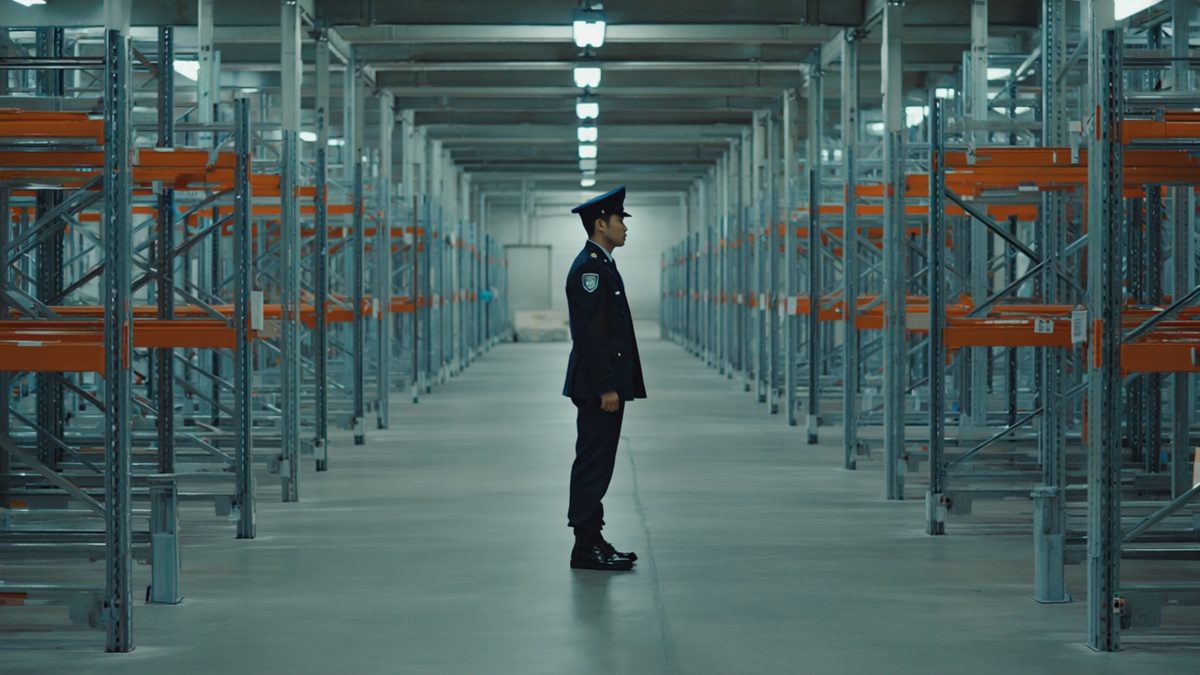
Most lone worker guidance targets office workers, field engineers, or healthcare staff. Security companies get a footnote, at best.
That gap is a problem. A patrol officer checking an empty industrial site at 2am faces a materially different risk profile than a community nurse doing a home visit. However, both are lone workers under European law, and both employers carry the same duty of care.
Security firms regularly deploy staff to locations where:
- No colleague is within earshot
- Response times from emergency services are long
- Physical confrontation is a realistic risk
- Communication coverage is unreliable
For a detailed breakdown of the specific risks facing guards on night shifts, see our guide to night security guard safety. The risks described there are exactly what this checklist is designed to help you document and control.
The European Regulatory Landscape: What Security Firms Must Know
Europe has no single lone worker law for private security. The EU Framework Directive 89/391/EEC requires employers to assess the risks of every job, including work done alone. National laws and sector rules add the details. In security, lone work is often the norm, so the risk assessment carries extra weight.
Member states can adopt stricter national rules. That means your obligations in Germany, France, or the Netherlands may exceed the baseline EU requirement.
What this means for security companies
In practice, three things are expected of virtually every security company operating in Europe.
First, written risk assessment. You must document the specific risks your lone staff face at each location or task type. Generic assessments do not satisfy this requirement.
Second, monitoring and communication systems. Workers must have a reliable means of raising an alarm and confirming their safety. A mobile phone alone is rarely sufficient.
Third, incident logging and review. All alerts, near-misses, and incidents must be recorded. You must demonstrate that the data informs your safety practice.
GDPR applies throughout. Any monitoring system you deploy must be proportionate, transparent to workers, and hosted in compliance with EU data rules.
The 5-Point Lone Worker Safety Compliance Checklist for Security Teams
Work through each point and mark it complete only when you have documentary evidence.

1. Risk Assessment Signed Off and Site-Specific
- Written lone worker risk assessment exists for every patrol route and lone-posting location
- Assessment covers physical threat, communication blackspots, environmental hazards, and medical risk
- Assessment reviewed in the last 12 months or after any significant incident
- Named responsible person has signed off each document
2. Monitoring Technology Meets Minimum Requirements
- Every lone worker carries a device capable of raising a manual panic alarm
- Automatic man-down or fall detection is enabled for high-risk postings
- GPS tracking on alarm event is active and provides real-time location data to a monitoring dashboard
- Indoor positioning covers buildings where GPS signal is unreliable
- Device configuration is documented and kept current
To understand what adequate monitoring hardware looks like, review how modern platforms enhance lone worker protection through personal trackers with real-time alerts and GDPR-compliant data handling.
For the full technical picture of what a monitoring system must do, see our page on lone worker safety tracking, which covers real-time tracking, alert management, and indoor positioning requirements in detail.
3. Alarm Receiving Centre (ARC) Integration
- Alerts route to a professional, 24/7 monitored ARC
- ARC has up-to-date contact protocols for each worker and site
- Response escalation steps are written, tested, and stored in the system
- ARC integration is tested at least quarterly and results are logged
4. Incident Logging and Audit Trail
- Every alert, check-in failure, and SOS event is automatically logged with timestamp and location
- Logs are accessible for at least 12 months
- A named person reviews incident data monthly and records findings
- Near-misses are recorded under the same system as confirmed incidents
- Data is stored on EU-hosted infrastructure in line with GDPR
5. Staff Training and Sign-Off
- All lone workers receive device training before their first lone posting
- Training records include date, trainer name, and worker signature
- Workers understand how to trigger a manual alarm and what happens next
- Refresher training is scheduled at least annually
- Workers have been informed of how their location data is used and retained
How White-Label Monitoring Software Simplifies Your Compliance Audit
Completing this checklist manually across dozens of sites and hundreds of workers is a significant administrative task. A purpose-built platform removes most of that friction.
A good lone worker safety compliance checklist security companies rely on is not just a document. It is a live record that the platform generates automatically.
With Cuebly, every alert is logged with full metadata. Device configuration is centralised and updated over the air. Indoor beacon positioning covers buildings where GPS fails. ARC integration is built in, not bolted on.
In addition, the customer environment gives your team real-time alarm information, geofence management, and full user reporting from a single dashboard. That means your audit trail builds itself.
As a white-label safety platform, Cuebly lets security firms and system integrators deliver a fully branded safety solution to their clients. You control the interface and the customer experience. Cuebly handles the infrastructure, compliance architecture, and over-the-air updates.
For continental European markets, that combination matters. GDPR enforcement is intensifying. Spain’s data protection authority received over 30,000 complaints in 2025 alone. EU-hosted data processing is a practical requirement, not a marketing claim.
The result is a compliance posture your clients can present to regulators, insurers, and procurement teams with confidence.
Ready to audit your lone worker safety programme? Book a demonstration with Cuebly and see how your current setup maps against each checklist item. Request a demo at cuebly.com.
Further reading
Frequently Asked Questions
The EU Framework Directive 89/391/EEC requires employers to assess risks and take proportionate measures for every worker, including those who work alone. Member states implement this in national law and may add requirements. For security companies this usually means documented risk assessments per site, a reliable alarm and communication system for each guard, and auditable incident logs.
A standard mobile phone does not satisfy most European lone worker safety obligations on its own. Regulators expect a monitored solution with automatic alerts, man-down detection, and GPS tracking. A phone has no fall detection, no automatic alarm if the worker is incapacitated, and no integration with a professional Alarm Receiving Centre. Dedicated devices or purpose-built apps connected to a 24/7 ARC are the accepted standard.
You need written risk assessments signed and dated within the last 12 months, device configuration records for all monitoring hardware, a complete log of alerts and incidents with timestamps and locations, ARC integration test records, and signed training records for every lone worker. All data should be stored on GDPR-compliant infrastructure, ideally EU-hosted.
Many security postings involve working inside large buildings, warehouses, or multi-storey facilities where GPS signal is unreliable or unavailable. Compliance requires that your monitoring system knows where a worker is at the point of an alert. Indoor positioning using Bluetooth beacons fills this gap, providing room-level or zone-level location data that GPS cannot deliver. Without it, your incident log may record an alarm but not a usable location.
Yes. A white-label lone worker monitoring platform lets a security company or system integrator deliver a fully branded safety solution while the underlying compliance infrastructure, including ARC integration, GDPR-compliant data hosting, over-the-air device configuration, and automatic incident logging, is managed centrally. This reduces the administrative overhead of maintaining compliance across multiple client sites and makes audit preparation significantly faster.
Demo
Offer this to your clients, under your own brand
In a demo we show the platform and the app, with a situation from your own clients.
Keep reading
Related articles

Safety Insights
Lone worker app or dedicated device: which is right?
A lone worker app turns a smartphone into a personal safety device. A dedicated device is a separate…

Safety Insights
Lone Worker Safety Utilities Sector Europe: What Field Teams Need in 2026
Utilities field teams in Europe face unique hazards, from live electrical infrastructure to public contact risks. As regulatory…

Safety Insights
Violence Against Lone Workers Industry Risk: Which Sectors Are Most Vulnerable
Violence against lone workers industry risk is rising sharply, with 20% of incidents in 2024 involving aggression. This…